
The call usually goes something like this. The old hot water system is leaking or on its last legs, someone at work swears by the solar collectors on their roof, a neighbour has just had a heat pump put in, and now you have two quotes that look nothing alike. Solar hot water vs heat pump is one of the most common decisions we help Geelong households make, and the honest answer depends far more on your roof, your power setup and how your household uses hot water than on which technology is better on paper.
This guide sets out how each one actually works, where each one struggles in our climate, and the questions we ask on a site visit before recommending either.
Both systems collect free heat, just from different places
A solar hot water system uses collector panels on the roof (either flat plates or rows of glass tubes) to heat water with direct sunshine. The water is stored in a tank, either up on the roof with the collectors or on the ground with a pump circulating water up and back. When the sun can’t keep up, a booster, electric or gas, tops up the temperature.
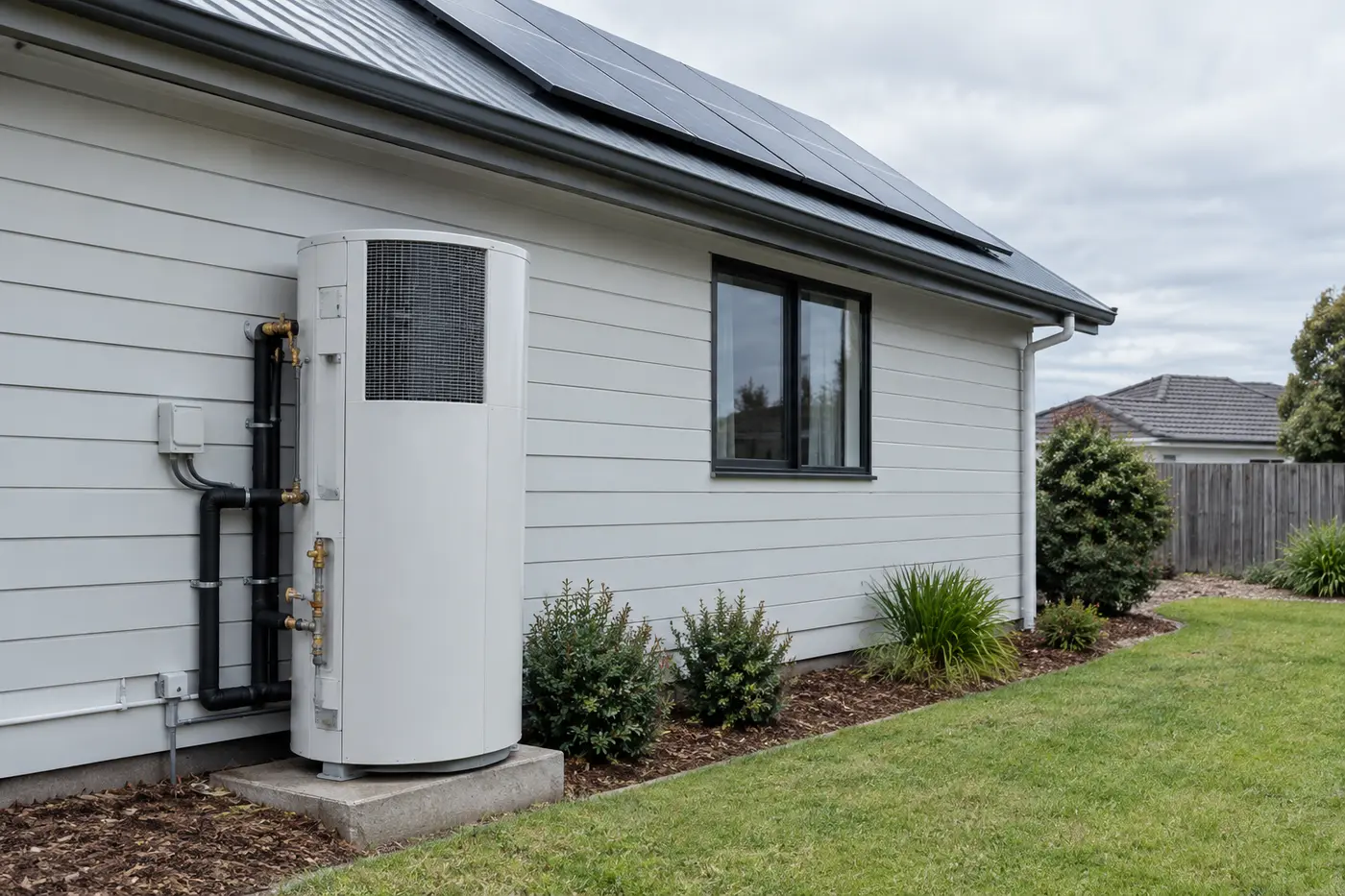
A heat pump hot water system sits on the ground and pulls warmth out of the surrounding air. It uses a refrigerant circuit, the same principle as a reverse cycle air conditioner running in heating mode, to move that warmth into a storage tank. It runs on electricity, but most of the heat it delivers comes from the air rather than the power point.
So one relies on sunlight hitting the roof. The other relies on the air around the unit. That single difference explains most of what follows.
Geelong winters are where the two really separate
Summer is easy for both. The trouble starts from May to September, when we get short days, plenty of grey cloud and cold mornings. That is also when a household uses the most hot water.
A solar system gets less sun in those months, so the booster does more of the work. With an electric booster, a run of overcast winter weeks can feel a lot like owning a plain electric storage system with expensive collectors on the roof. Gas boosting softens that, but it keeps you connected to gas, which many of our clients are trying to get away from.
A heat pump keeps working through winter, because there is still usable heat in cool air. It recovers more slowly on a cold morning and works harder, so a unit that is undersized for the household is the one that runs out mid shower. Getting the tank size right matters more than the brand.
They just fall short in different ways. Solar quietly leans on its booster, while a heat pump slows down. Knowing which of those your household would notice more is half the decision.
Your roof decides whether solar is even on the table
Solar collectors need a reasonable stretch of roof facing north, without shade for most of the day. Plenty of Geelong homes don’t have that. In established suburbs like Highton and Newtown, a mature tree canopy can shade the roof for much of a winter day. Many newer homes in Armstrong Creek and Lara have roof lines broken up by hips and valleys, with the best face already taken by solar panels.
Roof mounted tanks also add real weight, and older roof framing isn’t always up to it. A ground mounted tank with a pumped circuit avoids that, but adds a pump and more plumbing to maintain.
A heat pump only needs a patch of ground outside with airflow around it. That makes it the more flexible option on most of the properties we see, especially where the roof is shaded, already full or simply facing the wrong way.
Already have solar panels? That changes the maths
This is the point that surprises people most. If your home already has solar panels (PV, the kind that make electricity), a heat pump on a timer can do most of its heating in the middle of the day, using power from your own roof instead of exporting it to the grid for a small feed in credit. In practice, your existing panels become your solar hot water system, without a second set of collectors on the roof.
For a household with panels already installed, we find that a heat pump scheduled for the sunny part of the day is usually the stronger choice. Solar thermal makes more sense where there are no panels, plenty of clear north facing roof, and a household happy to keep a booster running through winter.
Where each one sits on the property, and what you will hear
Solar is close to silent. The collectors have no moving parts, and a ground tank system only adds a small circulating pump.
A heat pump has a fan and a compressor, so it makes a similar hum to an air conditioner outdoor unit. On a tight block, placement matters. We avoid putting units under bedroom windows, yours or the neighbour’s, particularly if the timer would run them early in the morning. Running it in the daytime to soak up solar power solves this neatly as well.
On the Bellarine and Surf Coast, salt air is the other consideration. Outdoor coils and fittings on any refrigerant based unit corrode faster near the water, so unit choice, placement out of the direct sea breeze and regular checks matter more there. It is the same issue we cover for air conditioners in our guide to choosing a system for coastal homes near Barwon Heads.
Replacing an old solar system is its own decision
A lot of the homes we visit already have a solar hot water system that is getting tired: a leaking roof tank, a failed booster or collectors that have lost efficiency. The instinct is to replace like for like. Sometimes that is right, especially if the collectors are in good shape and only one part has failed.
But it’s worth stepping back. Taking the tank off the roof and moving to a ground mounted heat pump removes the weight from the roof and the work of servicing anything up there. If you have since added solar panels, the heat pump can use them too. We talk through both paths, because the cheapest fix today isn’t always the cheapest system over the next decade.
Rebates can tip a close call
Victorian programs offer support for efficient hot water upgrades, and the details (eligibility, which products qualify and how much is available) change from time to time. Whether a rebate applies can decide between two quotes that otherwise look similar. We handle Victorian Energy Upgrades rebate applications as part of the job, so you don’t need to work out the forms yourself. Ask us to confirm what applies to your property at the time of quoting, rather than relying on a figure you saw in an ad months ago.
A quick way to see which side you fall on
A heat pump is usually the better fit if:
- you already have solar panels, or plan to add them
- your roof is shaded, already full, or faces east, west or south
- you want to get off gas entirely
- you would rather not have a heavy tank on the roof
Solar hot water still earns its place if:
- there are no PV panels and none planned
- you have a clear, unshaded, north facing roof
- the existing collectors are sound and only part of the system has failed
- there is nowhere sensible for an outdoor unit that won’t bother anyone
If you tick boxes on both lists, that’s normal, and it’s exactly what a site visit is for. Our heat pump hot water installation service starts with a look at your roof, your switchboard, where a unit could sit and how many people are showering each morning, before we recommend anything.
Because we hold the refrigeration, electrical and cabling accreditations ourselves, a heat pump install stays with one team, from the refrigerant side through to the wiring and timer setup.
Compare them on your own roof before you decide
Site visits throughout Geelong, the Bellarine Peninsula and the Surf Coast are free and carry no obligation. Tell us your suburb, the age of your current system and whether you have solar panels, and we can tell you which way we would lean and why. If your hot water has already failed, call us rather than sending an enquiry so we can move quickly. You can read more about how we install heat pump hot water systems around Geelong before you book.
Common questions about solar and heat pump hot water
What is better, a heat pump or solar hot water?
Neither wins everywhere. In Geelong, a heat pump suits most homes with shaded or crowded roofs and anyone who already has solar panels. Solar thermal suits homes with a clear north facing roof and no panels, as long as you accept the booster will do more work in winter.
Is solar water heating worth it in Geelong?
It can be, on the right roof. Our cloudy winters mean the booster carries more of the load from May to September, so the savings are smaller than in sunnier parts of Australia. If the collectors would be shaded for much of the day, it rarely stacks up.
Are heat pumps better than gas water heaters?
For households trying to electrify, a heat pump removes the need for a gas connection for hot water and can run on power from your own solar panels. Gas systems keep you paying for gas supply. If hot water is the last gas appliance in the house, switching it can let you close the gas account altogether.
Why don’t some plumbers like heat pumps?
Most of the complaints trace back to poor installs: units too small for the household, placed where the noise annoys someone, or never set up on a timer to suit the home. A heat pump has a refrigerant circuit, so it needs someone who understands that side as well as the plumbing. Sized and installed properly, they are a reliable option.
Can a heat pump run on my existing solar panels?
Yes. Setting the heat pump to run through the middle of the day lets it use power your panels are already generating. It’s one of the main reasons we often recommend a heat pump over solar thermal for homes that already have PV.
Does a heat pump work in a cold Geelong winter?
It does. Heat pumps keep extracting heat from cool air, although they work harder and recover more slowly on cold mornings. Choosing the right tank size for your household is what stops you running short in July.