
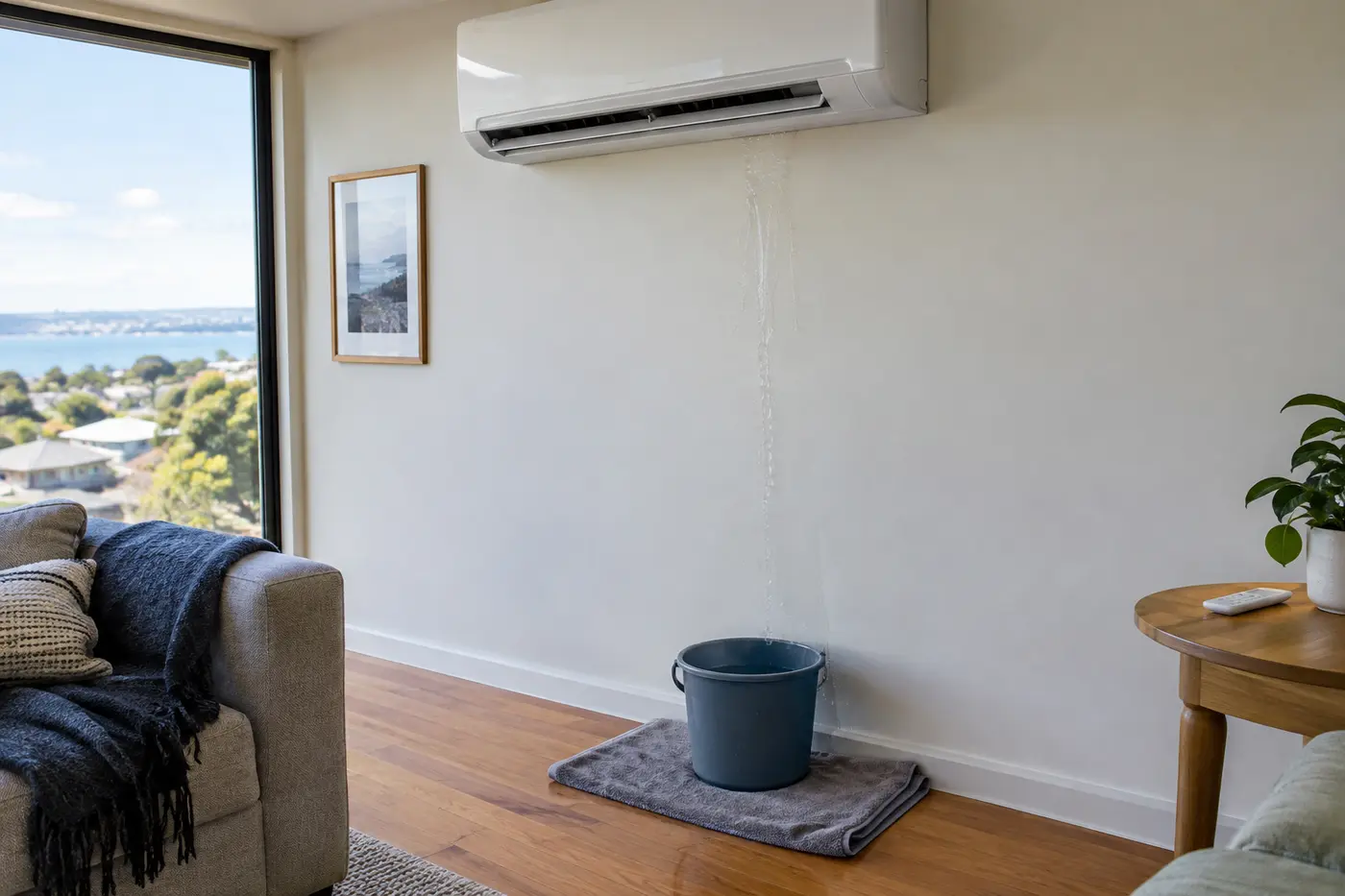
It is the first properly hot day of the year. You switch the split system on in the lounge room, and an hour later there is a wet patch on the carpet and a slow drip from the bottom of the indoor unit. An air conditioner leaking water inside the house is one of the most common calls we get once summer starts, and the good news is that most of the time the cause is simple. The water itself is not the fault. Where it is going is.
This guide covers what is normal, what to do straight away, what you can safely check yourself, and where the job should be handed to a qualified technician.
Water outside is normal. Water inside is not.
Every air conditioner makes water in cooling mode. Warm, humid air passes over a cold coil inside the indoor unit (the evaporator), moisture condenses on it the same way it does on a cold glass, and that water runs into a tray and out through a drain hose. On a split system the hose usually runs through the wall and lets the water out outside, near the outdoor unit or into a garden bed.
So a steady drip from that hose outside is the system doing its job. On muggy days, which we get plenty of around Geelong and along the Bellarine and Surf Coast in summer, there can be a surprising amount of it.
The outdoor unit can also leave a puddle in winter. In heating mode it periodically defrosts its own coil, and the melted ice runs out the bottom. Also normal.
What is not normal is water coming out of the indoor unit itself: dripping from the bottom edge, spitting from the air outlet, or running down the wall underneath. That means the water is not making it to the drain.
Do these things first, before anything else
Turn the unit off with the remote. Running it longer only makes more water.
If water is running near a power point, light switch or any wiring, do not touch anything wet. If you can reach your switchboard with dry hands and dry feet, switch off the circuit for the air conditioner. If you cannot do that safely, stay clear of the area and call an electrician or your air conditioning technician.
Then protect the room. Move furniture, electronics and rugs out of the way, put a towel and a bucket or container under the drip, and wipe the wall so the plasterboard does not soak it up. Take a couple of photos of where the water is coming from. They help a technician narrow things down and may be useful if you need to talk to your insurer later.
The usual reasons a split system drips indoors
We can only confirm the cause once the unit is opened up and tested, so treat this as a guide to what is possible rather than a diagnosis.
A blocked drain
This is the one we find most often. Dust, slime that grows in the damp tray, and the odd insect build up over time until the drain cannot keep up. The tray fills and overflows inside the unit. It tends to show up on the first humid day after months of the system sitting idle.
A drain hose that is kinked, damaged or has lost its fall
Water needs to run downhill the whole way out. If the hose has been squashed behind the unit, pulled loose, or never had enough slope to begin with, water sits in it and backs up. Hoses that end in a garden bed can also get buried under mulch or soil, and a blocked outlet stops the flow just as well as a blocked pipe. If your unit started leaking soon after it was put in, the position and drain run are worth a look, which is something we cover in our guide to planning a split system installation.
Dirty filters causing the coil to ice up
Clogged filters choke the airflow over the coil. With less warm air passing over it, the coil can get cold enough to freeze. When the ice melts, often after you turn the unit off, more water arrives at once than the tray can handle.
A refrigerant or mechanical fault
Ice on the coil or on the pipes at the back of the unit can also come from a refrigerant problem or a failing fan. These are not homeowner jobs. Handling refrigerant legally requires a licence in Australia, and the inside of the unit carries mains power.
The one check that is safe to do yourself
Cleaning the filters is the only part of this most owners should attempt. With the unit switched off, lift the front cover the way your owner’s manual shows, unclip the mesh filters and look at them. If they are grey and furry, vacuum them gently or rinse them in lukewarm water, then let them dry completely in the shade before you clip them back in.
Give the unit a few hours off so any ice can melt and the tray can drain. Empty the bucket, run it again on cooling, and watch it for half an hour. If it stays dry, the filters were probably part of the story.
Here is where we would ask you to stop. Please do not poke wire into the drain, blow into the hose, pour in cleaning chemicals or take the casing off. We regularly see cracked drain fittings and bent coil fins from well-meaning attempts, and those turn a simple clean into a repair.
When it is time for a technician
Book a qualified technician if any of these apply:
- it still drips after clean filters and a few hours off
- you can see ice on the coil or on the pipes
- water is getting into the wall, ceiling or near electrics
- it leaks indoors while heating, not just cooling
- you hear gurgling, or notice a musty smell or mould spots
- it began soon after installation
Our technicians clear and flush the drain, check its fall and outlet, clean the coil and tray, and test the refrigerant side and electrics. Because we hold the refrigeration, electrical and cabling accreditations ourselves, one visit can cover the whole job. You can read what a visit involves on our air conditioner servicing and maintenance page.
A little maintenance stops most leaks before they start
Most of the leaks we attend could have been avoided. Clean the filters as often as your manual suggests, and more often if you have pets or live near a dusty building site. Every so often, walk outside and check the end of the drain hose is clear of mulch, soil and spider webs.
Run the system on cooling for a while on a mild spring day, before you actually need it. Finding a leak in spring gives you time to get it fixed. Finding it in the middle of a January heatwave usually means waiting, because that is when everyone else is booking a technician too.
A regular professional service is where the drain gets flushed and the coil and tray cleaned, which is the bit you cannot reach yourself.
Common questions about air conditioner leaks
What are the common causes of an air conditioner leaking water?
Most indoor leaks come back to the drain: a blocked tray or hose, a hose that is kinked or loose, or a drain without enough slope. Dirty filters can cause the coil to freeze and then overflow as it thaws. Less often, a refrigerant or fan fault causes icing, and that needs a licensed technician.
What should I do if my AC is leaking water inside?
Turn it off with the remote, keep away from any water near power points or wiring, and switch off the circuit at the switchboard if you can do so with dry hands. Catch the drip with a towel and bucket, move anything valuable, and photograph the leak. Then check the filters, or call a technician if water is near electrics.
How do I unclog my AC condensate drain line?
We recommend leaving this to a technician. Pushing wire or blowing into the hose can crack fittings or just move the blockage deeper, and the drain connects to parts of the unit that carry mains power. What you can do is make sure the outside end of the hose is not buried or blocked.
Is water dripping from an air conditioner dangerous?
The water is just condensation, but where it lands matters. Water near power points or wiring is a safety risk, and a slow leak into plasterboard or carpet can lead to damage and mould. Water dripping from the hose outside, or from the outdoor unit in winter, is normal.
How much does it cost to fix an AC that is leaking water?
It depends entirely on the cause. A blocked drain is a very different job from a refrigerant fault or a drain that needs re-routing, so we would rather look at the unit than guess. A technician can tell you what is wrong and what fixing it involves before any work goes ahead.
Is it worth fixing a leaky air conditioner?
In most cases, yes. Many leaks come down to a blocked drain or dirty filters, which are maintenance jobs rather than signs the system is failing. If a technician finds a bigger fault on an older unit, they can talk you through whether repair or replacement makes more sense.
Get it looked at before summer
If your split system is dripping indoors, or you would just like it checked before the hot weather arrives, our servicing team works across Geelong, the Bellarine Peninsula and the Surf Coast. Book a visit through our Geelong air conditioning service team and we will find where the water is going and why.