
A call we get every few weeks goes something like this. An old gas heater in the lounge, two cold bedrooms down the hall, and two quotes on the fridge: one for ducted, one for three split systems. Both look reasonable. Neither tells the homeowner which one is right for their house.
That is the real problem with the ducted vs split system decision. Each is the better choice in some homes and the wrong choice in others. It comes down to how you use the house far more than brand or star rating, so this is how we work it through with Geelong homeowners when we visit.
The real difference is where the air comes from
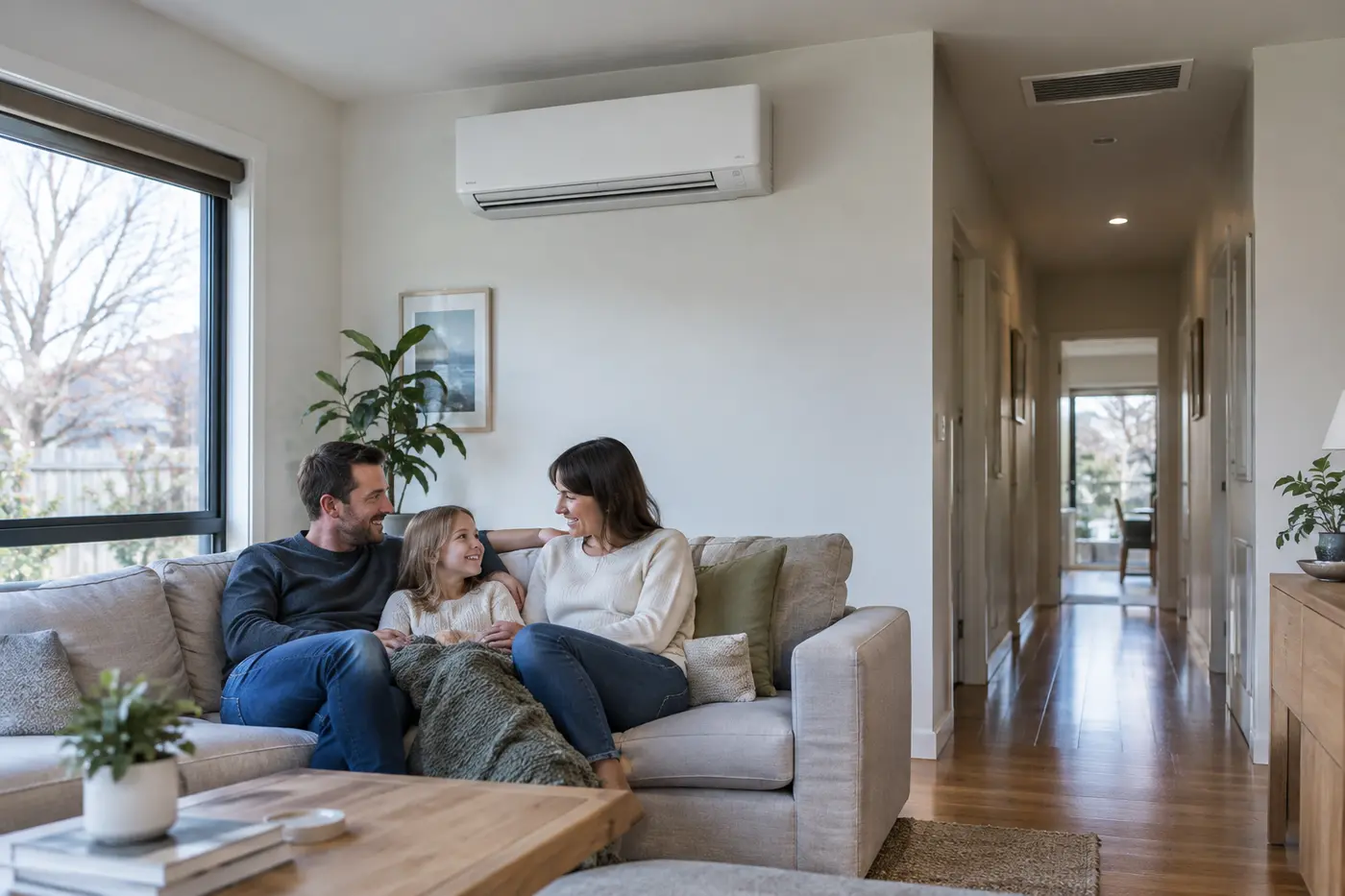
A split system has two parts: an indoor head mounted high on the wall, and an outdoor unit (the compressor) outside, joined by refrigerant pipes. Each indoor head heats or cools the room it sits in. Want three rooms covered? You usually end up with three heads, and often three outdoor units.
Ducted air conditioning uses one large indoor unit, normally hidden in the roof space, plus one outdoor unit. Insulated ducts carry the air to small vents in the ceiling of each room. You run the whole thing from a wall controller or an app.
In the homes we work on, both are usually reverse cycle, which means the same system heats in July and cools in January. In Geelong that matters. Plenty of our customers run their system for heating far more often than for cooling.
Split systems win when you live in two or three rooms
Most of the homes we look at do not need every room conditioned at once. A couple whose kids have moved out might spend nearly all their time in the open plan living area and the main bedroom. For a house like that, one or two correctly sized split systems are hard to beat.
The reasons are practical. A split only runs when that room needs it, so you are never paying to push warm air into an empty study. Installation is quicker and far less disruptive, because there is no ductwork to run through the ceiling. And if one unit fails, the rest of the house still has heating and cooling.
The trade-offs are honest ones. You see the indoor head on the wall. Each room has its own remote. Several outdoor units need wall space, and on a narrow block in Geelong West or Newtown that space runs out quickly. We also see homes where the third and fourth split went in years apart, leaving a mix of brands and remotes that nobody enjoys living with.
If splits are looking like your answer, our breakdown of what drives split system installation costs explains why one quote comes in higher than another.
Ducted wins when the whole house needs to be comfortable
Ducted comes into its own in family homes where bedrooms are spread out and people are in different rooms at different times. Four bedrooms, a study and a living area is a lot of wall heads. One ducted system covers the lot, with nothing on the walls except a controller.
The feature that makes ducted work well is zoning. The house is divided into zones (say, living areas and bedrooms) and you only send air where it is needed. Heat the living zone in the evening, then switch to the bedrooms at bedtime. Without zoning, a ducted system heats rooms nobody is using, and that is where most running cost complaints start.
Ducted also needs space. The indoor unit and ducts need usable roof space, and the system has to be sized and laid out properly. A poorly designed ducted system, with undersized ducts or vents in the wrong spot, is noisy and patchy, and no thermostat setting will fix it. Upfront cost is higher than a single split too, because you are paying for the ductwork, the vents and the design as well as the unit.
That is why our ducted reverse cycle installations start with measuring the home, room by room, before anyone talks about a model.
Running costs depend on how many rooms you heat at once
People ask us which is cheaper to run and expect a one word answer. It depends on how you live.
If you heat one living room for a few hours on a winter night, a single split will almost always use less power than a ducted system. It is a smaller machine doing a smaller job. If you are heating the living area and three bedrooms most evenings, the picture changes. Running four separate splits at once is not automatically cheaper than one well zoned ducted system, and it often feels less even through the house.
So the useful question is not which system is cheaper. It is how many rooms you condition at the same time, and for how long. Jot that down for a typical winter week before you collect quotes. It will tell you more than any brochure.
Geelong houses tend to push the decision one way
The housing around the region sorts itself surprisingly often. A few patterns we see again and again:
- Older weatherboards and post-war brick homes with low, crowded roof spaces often suit splits, or a multi-head system, better than ducted.
- New builds in Armstrong Creek and similar estates are the easiest place to fit ducted, especially before the ceilings go up.
- Coastal homes on the Bellarine and Surf Coast have outdoor units sitting in salt air, so needing fewer of them is a real advantage.
- Double storey homes can go either way, but the upstairs bedrooms in summer are usually what decides it.
We wrote separately about choosing a system for a new Armstrong Creek home, where the timing of the build matters as much as the system itself.
There is a middle option most people have not heard of
A multi-head split system runs several indoor heads from one outdoor unit. You still get wall heads and room by room control, but only one outdoor unit on the side of the house. It suits homes that want three or four rooms covered, have no room for ducts, and do not want a row of compressors along a narrow side path. It is not right for every house, but it is worth asking about before you settle on either extreme.
Five questions usually settle it
When we visit, these are the questions that end up deciding most jobs:
- How many rooms do you heat or cool at the same time on a normal day?
- Is there usable roof space, and how easy is it to get into?
- How long do you plan to stay in the house?
- Do wall heads bother you visually?
- Has the switchboard been upgraded?
That last one surprises people. The switchboard affects what can be installed and what the job involves, which is why we ask before we quote. Because we hold the refrigeration, electrical and cabling accreditations ourselves, we check it on the same visit rather than sending you off to find an electrician.
Site visits throughout Geelong, the Bellarine Peninsula and the Surf Coast are free and carry no obligation. Beyond a straightforward single split, we prefer to measure before quoting, and ducted vs split is exactly the kind of decision a tape measure and a look in the roof can settle.
Common questions about ducted vs split systems
Is ducted better than split system air conditioning?
Neither is better in every home. Ducted suits larger homes where several rooms need heating or cooling at the same time and there is usable roof space. Splits suit homes where people mostly use one to three rooms, or where ducts simply will not fit.
Which is cheaper to run, ducted or split?
For one room, a split system is almost always cheaper to run because it is a smaller machine doing a smaller job. Once you are conditioning most of the house at once, a properly zoned ducted system can compare well with running several splits together. Zoning is what keeps ducted running costs in check.
What are the downsides of a split system?
You can see the indoor head on the wall, each room has its own controller, and every extra room usually means another outdoor unit. In homes with lots of rooms, those outdoor units and separate remotes add up. A multi-head system can cut the number of outdoor units down to one.
Is it okay to run a split system all day?
Yes. Modern inverter split systems are built to run for long periods, and they slow down rather than switching off and on once the room reaches temperature. Running steadily at a sensible setting is usually more efficient than turning the unit off and on through the day. Keep the filters clean so it is not working harder than it needs to.
Can you add ducted air conditioning to an older house?
Often, yes, but it depends on the roof space. The ducts and indoor unit need room to run, and some older Geelong homes have low or crowded roofs that make it difficult. A site visit and a look in the roof is the only reliable way to know.
Can you mix ducted and split systems in one house?
Yes, and it is more common than people think. A typical example is ducted through the main house with a separate split in an extension, a studio or a room used at odd hours. Each system then does the job it is best at.
Still weighing up two quotes? We can look at the house and give you a straight recommendation either way. Book a free site visit through our ducted air conditioning service page and we will measure up, check the roof space and switchboard, and tell you honestly whether ducted or splits make more sense for your home.