
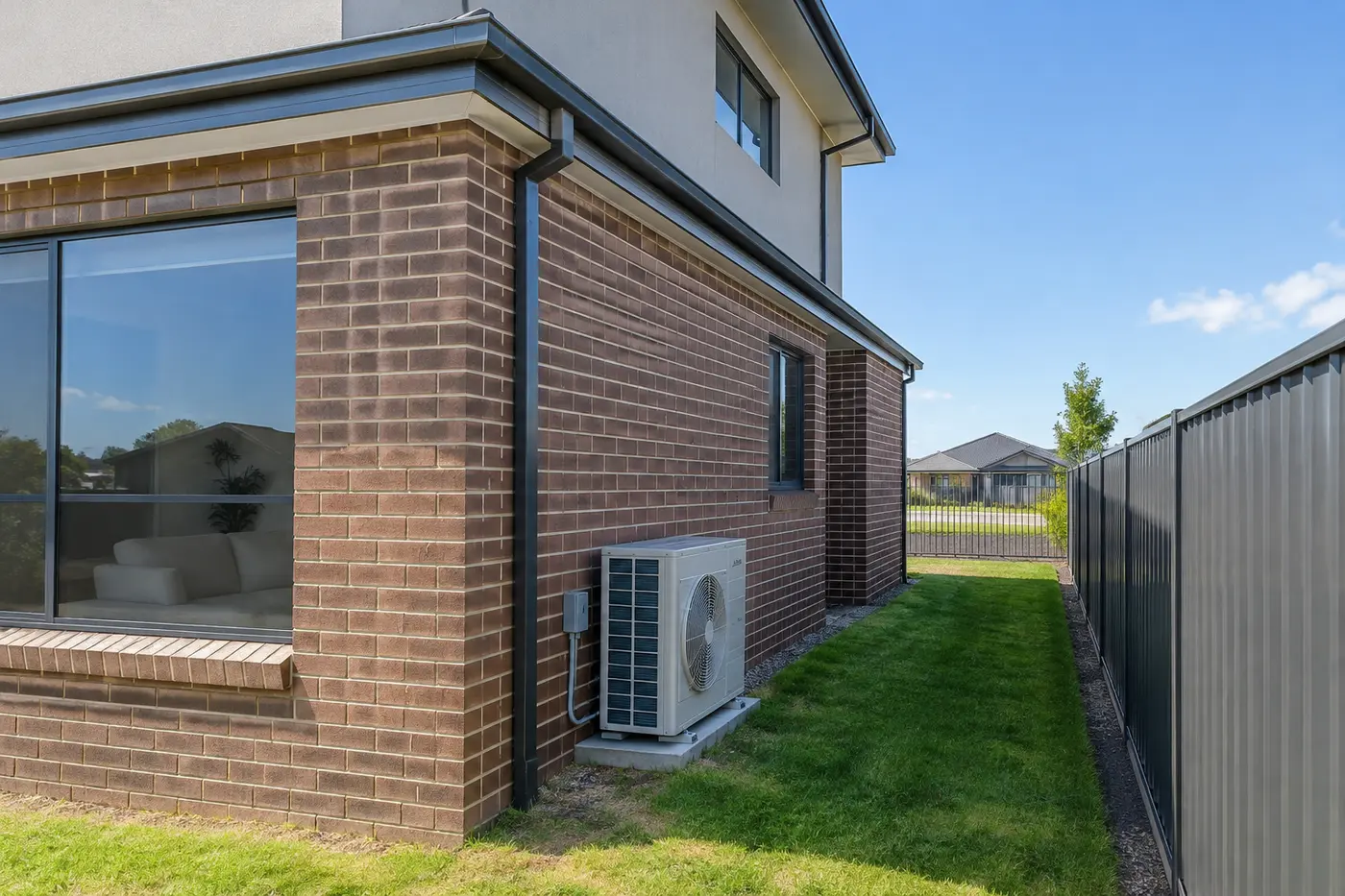
It usually happens in the first January. The keys were handed over in spring, everything felt fine, and then a hot northerly comes through and the single wall split the builder put in the living room just can’t keep up. The kitchen is warm, the upstairs bedrooms are worse, and the big glass sliders onto the alfresco are soaking up the afternoon sun. If you are trying to work out the best air conditioner for an Armstrong Creek home, that scenario is probably why you are reading this.
The honest answer is that there is no single best unit or brand. There is a best fit for the house you actually live in, and in Armstrong Creek the houses have a lot in common. That makes the decision easier than it looks.
Armstrong Creek homes share a few traits that change the answer
Most of the homes we look at in the estates around Armstrong Creek are recent builds. They tend to have open plan living that runs the full width of the back of the house, large windows and stacker doors, and bedrooms spread across one long single level or split over two storeys. Blocks are often compact, so side setbacks are narrow and the neighbour’s bedroom window can be only a few steps from where an outdoor unit would go.
Newer homes are also built tighter than older Geelong houses. That is good news for running costs, because a well sealed and insulated home holds its temperature. The catch is glazing. A wall of glass facing west or north can pull in more heat on a summer afternoon than a builder’s standard system was ever sized to remove.
Then there is heating. More and more of the newer homes in the area are all electric, with no gas heater at all. In that case your air conditioner is your heating too, and a Geelong winter will test it just as hard as a February heatwave.
Builder grade systems are sized to the contract, not to your family
This one surprises people. A builder’s air conditioning allowance is a line item, and it is usually set to tick a box at the lowest reasonable price. That often means one split system for the living area and nothing for the bedrooms, or a ducted system with a single zone, a small number of outlets and the return air grille squeezed into a hallway.
None of that is necessarily faulty. It just was not designed around how your household uses the house: who works from home, which bedrooms face the afternoon sun, whether someone sleeps during the day. Our own Armstrong Creek air conditioning work is a fair mix of brand new designs and fixing builder grade systems that cannot handle the glazing they were installed behind.
Before you replace anything, it is worth finding out whether the existing system can be improved. Sometimes adding zones, moving a return air grille or adding a second system for the upstairs is the better value move.
Matching the system to the house you live in
Here is how we usually think it through for the common home types in the area.
Single storey family homes: zoned ducted is hard to beat
For a typical four bedroom single level home, a ducted reverse cycle system with proper zoning is usually the strongest option. Reverse cycle means the same system heats and cools. Zoning means the house is split into areas you can switch on and off separately, so you are not cooling empty bedrooms at four in the afternoon or heating the living room overnight.
The design detail matters more than the badge on the unit. Outlet positions, duct sizing, where the return air sits and how the zones are grouped decide whether the house feels even or patchy. If you want to see how we approach it, our zoned ducted reverse cycle systems page explains the design side in more detail.
Double storey homes: plan for the upstairs first
Heat rises, so the upstairs bedrooms are almost always the hardest rooms to keep comfortable. A single ducted system in the roof can serve the upper level well, but getting air down to the ground floor often means running ducts through bulkheads or wall cavities, which is much easier before the plaster goes up than after.
In finished double storey homes, we often end up recommending either two separate ducted systems (one per level) or a ducted system upstairs with a large split for the downstairs living area. The second approach keeps costs sensible and puts the most capacity where the glass is.
Townhouses and smaller homes: splits or a multi-head
Where there is limited roof space or only a few rooms to condition, individual split systems are simple and efficient. If the problem is outdoor space, with nowhere sensible to put three or four outdoor units along a narrow side path, a multi-head system runs several indoor units from one outdoor unit. The trade off is that if that one outdoor unit fails, every room is affected, so it is not the right answer for every household.
What about evaporative cooling?
Evaporative cooling works by pushing air through wet pads, and it needs windows open to work properly. It does not heat. In an all electric home that relies on its air conditioning for winter warmth too, it usually means paying for a second heating system, which is why we rarely suggest it as the main system for a new Armstrong Creek build.
The outdoor unit needs a home too
On compact blocks, the location of the outdoor unit is one of the first things we sort out on a site visit. It needs clear airflow so it is not just breathing its own hot exhaust, access for servicing, and enough distance from bedroom windows (yours and next door’s) that it is not a nuisance at night.
A narrow side setback with a fence on one side and a wall on the other can trap air and hurt performance on the hottest days. Sometimes a wall bracket, a different side of the house or a slightly longer pipe run gives a better result than the obvious spot.
Brand matters less than sizing and installation
We get asked about brands constantly. The reputable manufacturers all make good equipment, and the differences between them on a well designed job are smaller than most people expect. What separates a good result from a bad one is getting the capacity right for the room and the glazing, a clean installation with properly sealed and insulated pipework, and controls the household will actually use.
For a broader look at how reverse cycle compares with gas ducted, hydronic and evaporative options across the region, our guide to choosing a heating and cooling system for a Geelong home covers the wider picture.
What we look at when we visit
Beyond a straightforward single split, we prefer to measure before quoting. On an Armstrong Creek visit we are usually checking a short list of things:
- which way the main living area and its glass face
- roof space access and ceiling insulation
- the existing system, its type and how it is zoned
- whether the switchboard has capacity for a larger system
- where an outdoor unit can sit without bothering anyone
Because our team holds the refrigeration, electrical and cabling accreditations in house, the electrical side of an upgrade stays with the same people doing the install. Site visits throughout Geelong, the Bellarine Peninsula and the Surf Coast are free and carry no obligation.
If your new home is too warm upstairs, too cold in the living room or just not behaving the way you expected, have a look at our ducted air conditioning service and book a visit. Tell us the suburb, the type of house and which rooms are giving you trouble, and we will take it from there.
Common questions from Armstrong Creek homeowners
What should I look for when buying an air conditioner for a new home?
Start with the house, not the product. Look at which rooms you need to heat and cool, which way the glass faces and whether you have roof space for ducting. Then make sure the system is reverse cycle so it handles winter as well, and that it is sized by someone who has actually measured the rooms.
Is ducted or split system better for a new build?
For most single storey family homes, zoned ducted reverse cycle gives the most even comfort and keeps indoor units off the walls. Split systems suit smaller homes, townhouses and situations where only a few rooms need conditioning. Many double storey homes end up with a combination of both.
What is better, Daikin or Mitsubishi?
Both are well regarded manufacturers, as are several others, and either can do an excellent job. The capacity, the duct design and the quality of the installation will affect your comfort far more than the choice between two reputable brands. We would rather talk about your house first and the brand second.
What AC brands should I stay away from?
Rather than avoiding a name, avoid situations: a unit with no local service support, a system bought online and fitted by someone who will not be around if it fails, or a unit chosen purely because it was the cheapest on the day. Ask who services it locally and how warranty claims are handled before you buy.
What is the $5,000 rule for AC units?
It is a rule of thumb from the United States: multiply the age of the unit by the repair quote, and if the result is over $5,000, replacement usually makes more sense. It is a rough guide only. In a newer Armstrong Creek home the question is more often whether a builder grade system is the right size, not whether an old one is worth fixing.
Can I upgrade the builder’s ducted system instead of replacing it?
Often, yes. Adding zones, improving the return air or adding a second system for the upper level can fix the problem for less than a full replacement. It depends on the size of the outdoor unit and the condition of the ductwork, which is why we check it in person.